If your attic bakes and your A/C runs nonstop, you are not alone in Rosedale. Many homes here were built before modern efficiency standards, which means hot attics and leaky ducts can work against your comfort. In this quick guide, you will learn what insulation level to target, how to tackle duct sealing, which local rebates to consider, and how ECAD rules affect sellers. Let’s dive in.
Why insulation and ducts matter in Rosedale
Rosedale’s housing mix includes many older single‑family homes with traditional attics and ducts in unconditioned spaces. That setup lets heat flood your attic and makes your system work harder to keep you cool, especially through Austin’s long, humid summers. The neighborhood’s age and form make insulation upgrades and duct improvements both common and impactful for comfort and bills. For local context, explore the Rosedale Neighborhood Association overview.
How much insulation you need
Insulation’s job is to slow heat flow, and R‑value is the measurement. In Austin’s climate, a practical attic target for existing homes is at least R‑38, with R‑49 aligning with current code guidance for new construction where feasible. The U.S. Department of Energy explains recommended levels and how they apply to tax credits in their overview of insulation and air sealing.
Best attic materials for upgrades
- Blown‑in fiberglass or cellulose: cost‑effective for “topping up” an attic to R‑38 to R‑49.
- Fiberglass batts: useful in open, accessible areas but harder to fit around obstacles.
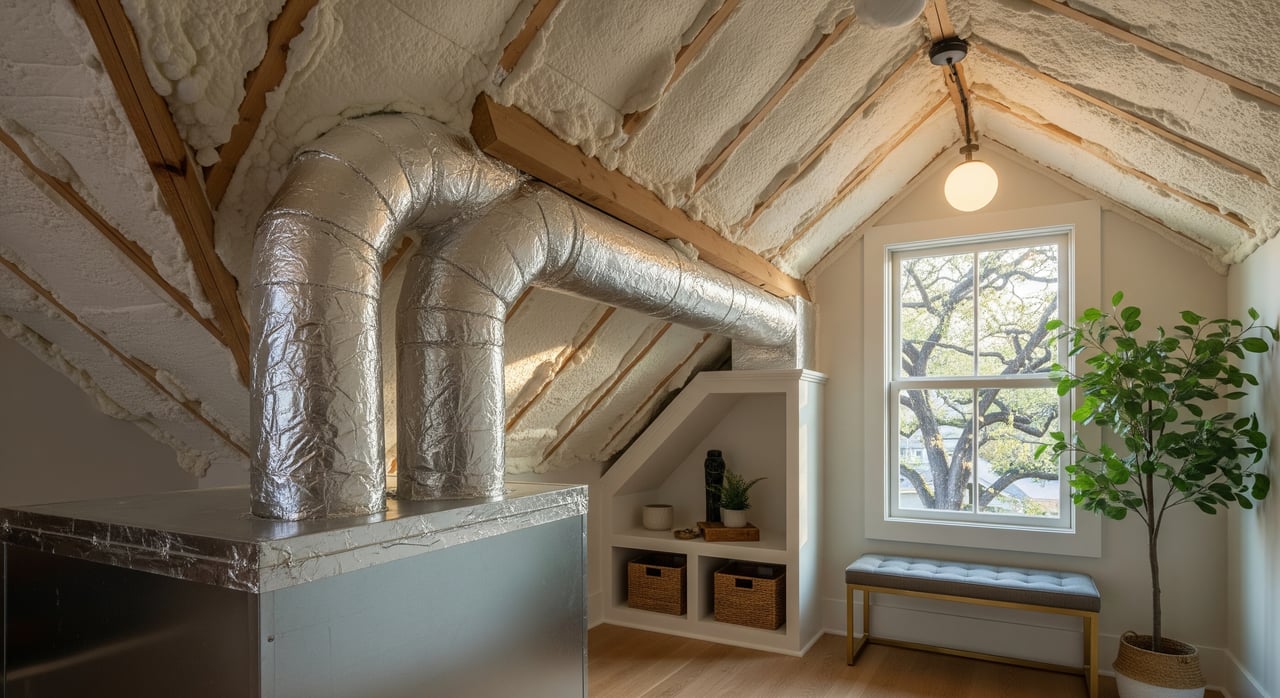
- Spray foam: creates an air barrier and can support an unvented, conditioned attic when designed correctly, but costs more and requires careful detailing in hot, humid climates.
Air seal before you insulate
Air leaks around light fixtures, plumbing penetrations, and the attic hatch can undermine new insulation. Seal these bypasses first so your insulation performs as designed. ENERGY STAR’s guide to “Rule Your Attic” explains why sealing and insulating together is often the most cost‑effective first step for comfort and savings. Review their tips in Rule Your Attic.
Duct sealing, testing, and insulation
Leaky ducts in attics can waste a surprising amount of cooling. ENERGY STAR notes that leakage can cut system efficiency by as much as 20 percent, and many older systems lose 20 to 30 percent through gaps and seams. See the benefits and common fixes in ENERGY STAR’s duct sealing overview.
To find and fix leakage, a contractor can perform a duct blaster test and measure “CFM25.” While Rosedale retrofits do not need to meet new‑construction standards, common reference points come from ENERGY STAR and RESNET methods. Learn how pros measure leakage in this duct leakage testing guide.
If your ducts run through the attic, insulating them is also key. Texas energy code–based guidance commonly calls for R‑6 to R‑8 duct insulation in unconditioned spaces. For details and compliance notes, review Texas duct system requirements.
Rebates, credits, and typical costs
Austin Energy’s Home Energy Savings program offers rebates for attic insulation, air sealing, and duct improvements when you use a participating contractor. Rebates are calculated by formulas that consider attic square footage, added R‑value, and duct work scope, and the program also provides low‑interest financing options. Program amounts change, so check the current Home Energy Savings offerings before you start.
At the federal level, certain insulation and air‑sealing projects may qualify for a tax credit when installed to meet current rules. The DOE explains eligibility and documentation in its overview of insulation and air sealing.
For budgeting, local quotes in Austin commonly price blown‑in attic insulation around 1.00 to 1.50 dollars per square foot, with many projects totaling about 1,000 to 4,000 dollars depending on attic size and prep. See a summary of typical local ranges from HomeBlue. Duct sealing costs vary widely based on access, leakage, and whether you choose manual mastic sealing or aerosolized sealing, so request written estimates with pre‑ and post‑test results.
Selling in Rosedale? Know ECAD
If your home is 10 years or older and served by Austin Energy, you must provide an ECAD energy audit to the buyer unless you qualify for an exemption. The audit must be completed by a certified ECAD Energy Professional and typically runs about 200 to 300 dollars for a standard single‑family home. Completing qualifying work through Home Energy Savings can produce documentation that meets ECAD requirements. Get the details for sellers on Austin Energy’s ECAD page.
A simple plan for your home
- Start with an energy checkup or ECAD‑style audit to identify priorities.
- Air seal the attic: address penetrations, the attic hatch, and recessed lights with rated materials.
- Add insulation to reach at least R‑38, and consider R‑49 where feasible.
- Test, seal, and insulate ducts in the attic. Ask for pre‑ and post‑work CFM25 results to verify improvement.
How to choose the right contractor
- Confirm licensing and insurance. HVAC and duct work in Texas must be performed by a licensed contractor. You can verify licensing with the Texas Department of Licensing & Regulation.
- Ask if they are an Austin Energy participating contractor if you plan to pursue rebates.
- Require diagnostics. Request blower‑door or duct‑blaster testing, with written pre‑ and post‑results.
- Specify materials and R‑values in writing. Make sure quotes include air sealing, attic access prep, and any insulation removal.
- Expect durable fixes. Pros should use mastic or UL‑181 tapes for ducts, not general‑purpose tape. Ask for photos of major repairs.
Make your home comfortable and market‑ready
A well‑sealed attic, proper insulation, and tight ducts can help your home feel cooler, reduce energy bills, and simplify ECAD compliance when it is time to sell. If you plan to list soon, documenting upgrades and program participation can also strengthen your home’s story for buyers.
Ready to prioritize the right improvements for your Rosedale home and timing? Let’s talk about comfort, value, and a smart path to market. Connect with Christine Hsu for hyperlocal guidance and a tailored plan.
FAQs
How much attic insulation should a Rosedale home have?
- Aim for at least R‑38 in the attic, with R‑49 aligning with current code guidance for new construction where feasible.
Will insulation help with humidity in Austin’s climate?
- Insulation reduces heat flow, which helps your A/C remove moisture more effectively, but it does not dehumidify by itself. Pair insulation with air sealing and correct HVAC sizing for best results.
How can I tell if my ducts are leaking in a Rosedale bungalow?
- Signs include rooms that never cool, high bills, or visible gaps in attic ducts. The reliable way to know is a duct blaster test that measures leakage.
What Austin Energy rebates apply to attic and duct work?
- The Home Energy Savings program offers rebates for attic insulation, air sealing, and duct sealing or replacement when you use a participating contractor. Rebates change, so confirm current offerings before you start.
Do I have to complete an ECAD audit when I sell?
- If your home is 10 years or older and served by Austin Energy, you must disclose an ECAD audit unless you qualify for an exemption. Completing qualifying upgrades through Home Energy Savings can produce documentation that satisfies ECAD requirements.