If you are deciding between Clarksville and Tarrytown, you are really choosing between two distinct versions of West Austin living. Both neighborhoods are well-known, well-located, and full of character, but they offer different day-to-day experiences. This guide will help you compare history, housing patterns, lifestyle, and practical buyer fit so you can better understand which one lines up with the way you want to live. Let’s dive in.
Clarksville and Tarrytown at a Glance
Clarksville and Tarrytown are both in West Austin, but they have different identities shaped by history, planning, and neighborhood form. Clarksville is one of Austin’s oldest neighborhoods and has deep roots in the city’s Black freedom-colony history. The Texas Historical Commission identifies the Clarksville Historic District as a National Register district, and the City of Austin highlights the Haskell House as part of one of the first freedom colonies established west of the Mississippi after the Civil War.
Tarrytown, by contrast, is part of the Central West Austin planning area and is often experienced as a lower-density residential neighborhood with a defined neighborhood center. According to the City of Austin planning framework, this area is generally bounded by 35th Street, MoPac, Lady Bird Lake, and Lake Austin. The city’s neighborhood plan identifies Tarrytown as a center with shopping, library, church, and fire-station nodes around Exposition and Windsor Road.
Clarksville: Historic and Urban
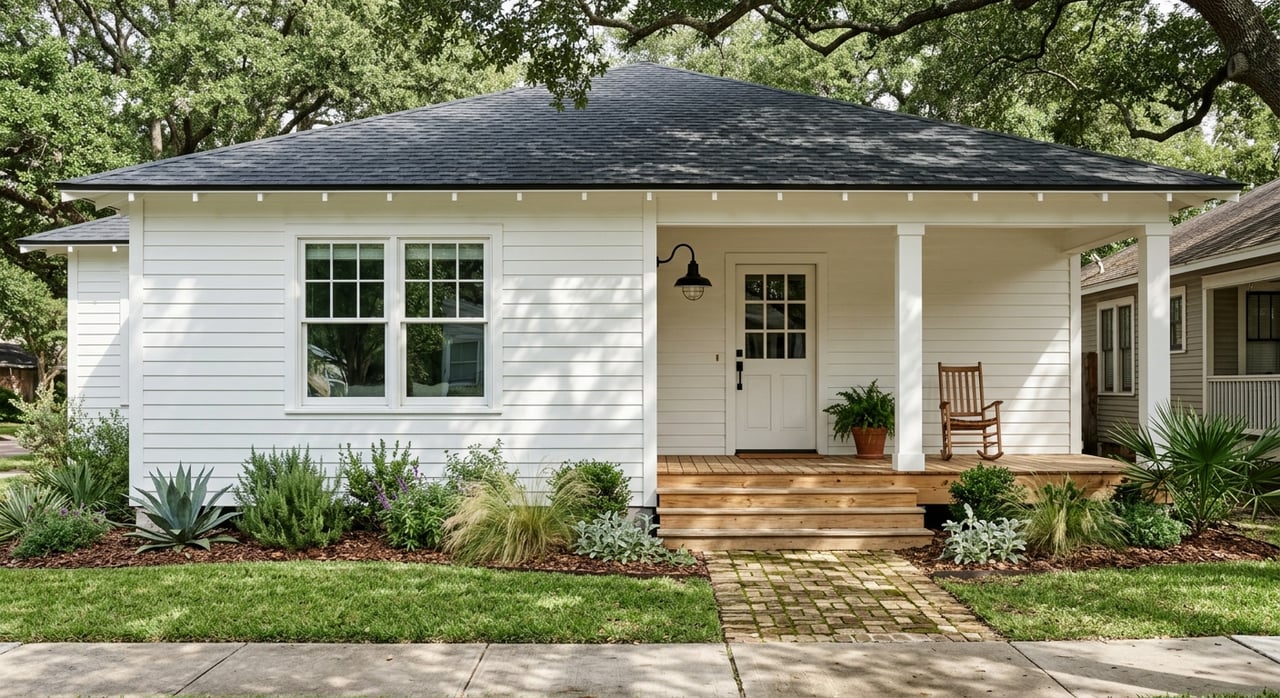
Clarksville tends to appeal to buyers who want a strong sense of place and a closer connection to central Austin. Its historic district includes Bungalow/Craftsman and Late Victorian styles, giving the area an older and more compact feel. The Old West Austin neighborhood plan also notes that many homes in the area were built 60 to 90 years ago.
The lot pattern supports that more urban rhythm. AIA Austin’s HOME Initiative analysis, based on Travis County appraisal data, places Clarksville’s median residential lot size at 6,665 square feet. Typical lots are about 50 feet wide, and many homes sit closer to the street, often with single-width driveways, rear garages when present, and common alley access.
Tarrytown: Spacious and Residential
Tarrytown generally feels more spread out and buffered from the street. The Central West Austin plan describes it as an eclectic mix of architectural styles, with mostly one- to two-story single-family homes. It also notes a street network that mixes a grid with winding roads and cul-de-sacs, with no alleys within Tarrytown.
Lot size is one of the clearest differences. The same AIA Austin analysis places Tarrytown’s median residential lot size at 9,344 square feet, notably larger than Clarksville’s. Typical lots are 65 feet wide or more, often paired with wider ranch-style homes, larger front yards, and double-width driveways.
Housing Differences That Matter
If you are comparing these neighborhoods as a buyer, the housing pattern affects more than curb appeal. It shapes privacy, yard space, parking, renovation potential, and how the home relates to the street. In practical terms, Clarksville usually feels tighter-grained and more connected to its surroundings, while Tarrytown often feels calmer and more set back.
Here is a simple side-by-side view:
| Feature | Clarksville | Tarrytown |
|---|---|---|
| Historic identity | Strong historic district presence | Primarily residential neighborhood center identity |
| Typical lot feel | Smaller and more compact | Larger and more spacious |
| Median lot size | 6,665 sq ft | 9,344 sq ft |
| Street relationship | Homes often closer to street | Larger front yards and more setback |
| Driveway pattern | Often single-width | Often double-width |
| Alley access | Common in many areas | Very rare or none |
For many buyers, this comes down to lifestyle fit. If you want a home that feels rooted in older Austin with a more compact streetscape, Clarksville may stand out. If you want more separation, more yard, and more room for additions or larger home footprints, Tarrytown may be the better match.
Walkability and Daily Routine
Walkability means different things in these two neighborhoods. In Clarksville, the appeal is often tied to downtown-oriented routines and nearby commercial corridors. The Old West Austin neighborhood plan notes that residents value neighborhood-oriented shops and supports a mix of residential and commercial uses south of 6th Street along Lamar and West Lynn, with Lamar Boulevard, 5th Street, and 6th Street identified as principal commercial corridors.
That said, the same plan notes that many streets lack sidewalks on one or both sides. So while Clarksville can feel very walkable for destination trips, the pedestrian experience may be less uniform block to block.
Tarrytown’s routine is more node-based. The Central West Austin neighborhood plan centers daily activity around Exposition and Windsor Road, where Tarrytown Shopping Center, Howson Library, the Episcopal Church of the Good Shepherd, and Fire Station #10 cluster. In other words, daily errands and neighborhood services tend to collect around a few familiar hubs rather than blending into a more urban street grid.
Parks and Recreation Access
Both neighborhoods offer strong access to outdoor amenities, but the feel is different. In Clarksville, nearby spots include the Clarksville Splash Pad, Pease Park’s Kingsbury Commons, and city-recognized historic sites around Haskell House and Don Baylor/Westenfield Park. These destinations support a lifestyle that feels tied to central Austin and public gathering spaces.
In Tarrytown, recreation is one of the neighborhood’s biggest lifestyle draws. The Central West Austin plan points to amenities such as Laguna Gloria, Mayfield Park, Reed Park, Lions Municipal Golf Course, WAYA, Walsh Boat Landing, and Red Bud Isle. Official destination pages also reinforce that these places offer easy access to lake-edge and outdoor activity near central Austin.
If your weekends revolve around parks, waterfront access, and established recreation spots, Tarrytown may feel especially compelling. If you like a mix of urban proximity, neighborhood landmarks, and nearby public spaces, Clarksville may feel more natural.
Which Neighborhood Fits Your Priorities?
If you are choosing based on feel, the simplest shorthand is this: Clarksville offers historic charm and the closest-feeling urban connection, while Tarrytown offers bigger lots, calmer streets, and a lifestyle built around neighborhood centers, parks, and the lake.
Clarksville may be the stronger fit if you want:
- A neighborhood with deep historic identity
- A more compact streetscape
- Smaller lots and older housing character
- Close-in access that feels more urban and downtown-connected
Tarrytown may be the stronger fit if you want:
- Larger lots and more front-yard separation
- A quieter, lower-density street pattern
- A neighborhood-center feel for daily errands
- Easy access to parks, lake-oriented recreation, and outdoor amenities
Neither neighborhood is better across the board. The right choice depends on how you define convenience, privacy, architecture, and everyday rhythm.
A Practical Way to Compare in Person
Online research can narrow your list, but these two neighborhoods are best understood on the ground. Walk a few blocks in Clarksville and notice how the homes sit on their lots, how the streets feel, and how quickly you connect to surrounding destinations. Then spend time in Tarrytown and pay attention to lot widths, street patterns, and how the neighborhood nodes shape daily life.
If you are buying, this kind of side-by-side comparison can quickly clarify your priorities. If you are selling in either area, understanding these differences can also help shape pricing, marketing, and the story you tell buyers about your home.
Whether you are drawn to Clarksville’s historic texture or Tarrytown’s spacious residential feel, having neighborhood-level guidance can make your decision much clearer. If you want help comparing homes, blocks, and lifestyle tradeoffs in West Austin, Christine Hsu offers concierge-level guidance tailored to how you actually want to live.
FAQs
What is the main difference between Clarksville and Tarrytown in West Austin?
- Clarksville generally feels more historic, compact, and downtown-adjacent, while Tarrytown generally feels more spacious, lower-density, and centered around neighborhood nodes and recreation.
Are lot sizes larger in Tarrytown than in Clarksville?
- Yes. The research provided places Clarksville’s median residential lot size at 6,665 square feet and Tarrytown’s at 9,344 square feet.
Is Clarksville known for historic homes in Austin?
- Yes. The Clarksville Historic District is listed by the Texas Historical Commission, and the district includes styles such as Bungalow/Craftsman and Late Victorian.
What is daily life like in Tarrytown compared with Clarksville?
- Tarrytown’s daily pattern is more centered around neighborhood hubs near Exposition and Windsor Road, while Clarksville is more tied to downtown-oriented routines and nearby commercial corridors like Lamar and West Lynn.
Which West Austin neighborhood is better for parks and recreation access?
- Both offer nearby outdoor amenities, but Tarrytown is especially associated with recreation destinations such as Mayfield Park, Laguna Gloria, Reed Park, Lions Municipal Golf Course, Walsh Boat Landing, and Red Bud Isle.
How can you decide between Clarksville and Tarrytown when buying a home?
- A good approach is to compare each neighborhood in person, paying attention to lot size, street feel, housing style, nearby amenities, and how each area fits your daily routine.