Are you wondering how Austin’s HOME rules might change what your Rosedale lot is worth? You are not alone. Many owners are weighing whether to remodel, add an ADU, or redevelop into multiple homes. In this guide, you will learn how increased unit capacity can influence land value, what makes a lot more attractive to investors, and how to decide your next move with confidence. Let’s dive in.
What HOME rules aim to do
HOME-style updates expand the types of homes allowed on lots that were traditionally limited to single-family. In many cases, the goal is to permit more housing types like duplexes, triplexes, cottage courts, and ADUs. Where the rules allow up to three units on one lot, the potential yield increases, which can shift how buyers value land.
City code standards and procedures change over time. Before you make decisions, confirm the current rules with the City of Austin Planning Department and review the Land Development Code for your specific parcel.
Why Rosedale lots stand out
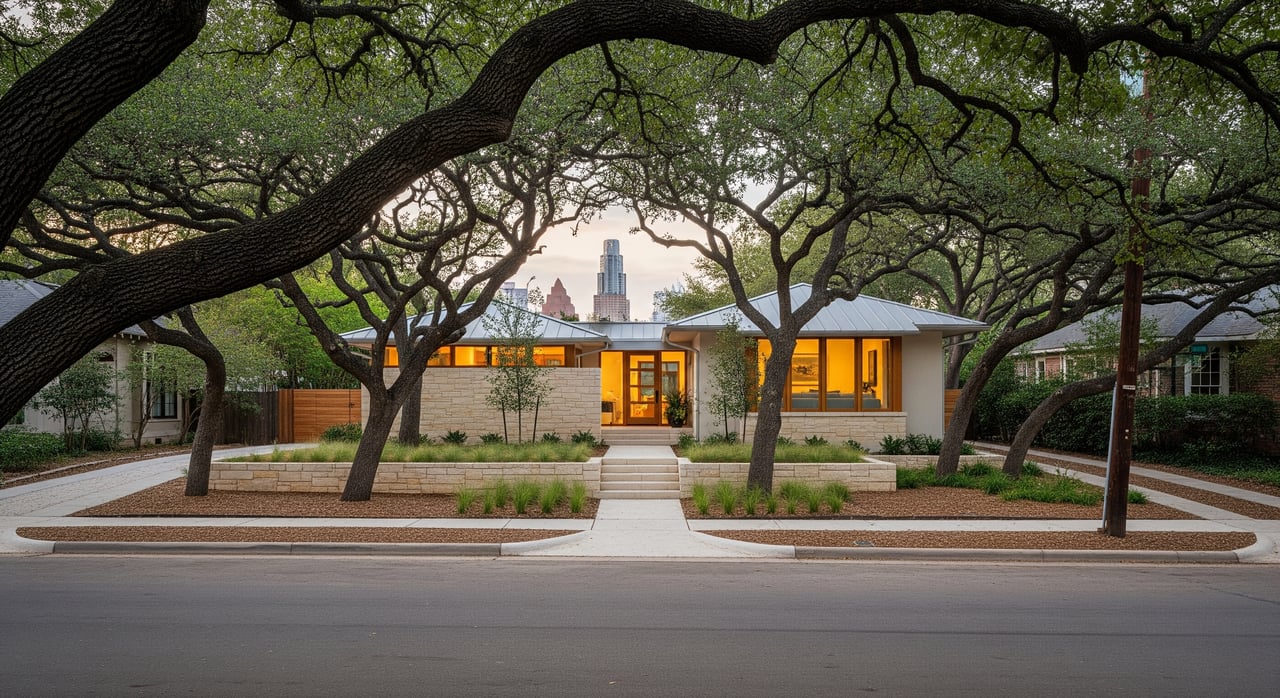
Rosedale is a central neighborhood with many original-era lots and a mix of mid-century and newer infill homes. Typical lot sizes in the 4,000 to 8,000 square foot range are common in inner Austin. Many parcels have regular shapes, such as around 50 feet of frontage by 125 feet of depth.
Those physical traits make Rosedale a plausible candidate for small multiplex redevelopment where the rules permit it. Lots with alley access, corner locations, or larger dimensions often have more flexibility for parking and unit placement.
Build paths now possible
Single-family plus ADU
You can keep or replace a primary home and add an accessory dwelling unit. This option can involve lower regulatory friction in many contexts. It fits owner-occupants who want a rental income supplement, space for guests, or multigenerational living.
Duplex conversion or new duplex
You can reconfigure an existing home into two units or rebuild as a duplex. This creates two primary homes on one lot. It can be attractive if you want two saleable units or two income streams.
Triplex or 2 primary plus 1 ADU
Where permitted, up to three households on one lot is the maximum scenario. This can take the form of a triplex or two primary units plus an ADU. The viability depends on setbacks, floor area, parking, and site constraints.
Cottage cluster or small multiplex
On some lots, three smaller homes arranged as a cluster may meet code standards. This approach can solve for access or parking while offering a distinct product type.
What really drives lot value
Land as a product
When a lot can legally support multiple saleable or rentable homes, you are not just selling a single-family site. You are selling a small development site. Buyers will value the parcel based on the maximum feasible net return after cost and profit.
Bid competition
Investors and small builders will pay more for lots with clear, by-right capacity and straightforward buildability. Owner-occupiers who plan to add an ADU or lightly remodel will value the lot differently. This segmentation can create a premium for lots that can deliver two or three units without heavy approvals.
Timing and certainty
Entitlement certainty carries real value. Lots with fewer reviews and predictable timelines tend to command higher prices. Longer or uncertain approvals usually reduce what a developer is willing to pay.
How to tell if your lot pencils
Residual land value explained
A common approach is residual land valuation. In simple terms:
Residual land value ≈ Gross project value from all units minus total development costs and required profit.
If the residual is above your expected lot price, redevelopment is more attractive. If it is below, the project is unlikely to move forward.
Key inputs to estimate
- Gross unit value: For for-sale homes, estimate price per unit from relevant comps. For rentals, estimate stabilized net operating income and apply a local cap rate.
- Hard costs: Include per-square-foot build costs for small multifamily or rowhouse product, plus site work, utilities, and tree protection or mitigation.
- Soft costs and fees: Architecture, engineering, permitting, impact fees, connections, and contingency. Many projects carry 10 to 25 percent contingency on hard costs.
- Financing and profit: Construction loan terms, interest rates, and a target developer return.
- Taxes: New construction typically resets appraised value, and homestead exemptions apply only to owner-occupied property.
Sensitivity check
Small changes in sales pricing, rents, or construction costs can swing the outcome. Higher interest rates or unexpected site expenses, such as parking or significant tree mitigation, can turn a thin deal into a non-starter.
Rosedale buyer demand patterns to watch
Investor focus
Expect increased interest from small builders and investors where the code clearly supports multiple units. Corner lots, alley access, and larger dimensions are likely to be targeted first. Shorter entitlement pathways tend to draw the most aggressive bidding.
Owner-occupier demand
Some buyers want the option to add an ADU or support multigenerational living. They may pay a premium for lots that allow accessory units without complex approvals.
Effects on single-family pricing
Allowing more homes can moderate single-family price growth over time as supply options expand. In the near term, the land beneath certain single-family homes may rise in value if investors compete for redevelopable sites. The supply effect often plays out more slowly.
Neighborhood character and resale segments
A mix of product types can emerge, such as for-sale townhomes and small multiplex rentals. Each attracts different buyers and shapes nearby resale comparables. Understanding the likely end product on your block helps set expectations.
Site and code constraints to evaluate first
- Lot size and shape: Smaller or irregular sites limit footprints, parking, and outdoor space. Regular rectangles are easier to design around.
- Access: Alley access improves parking layout and unit placement. Driveway-only frontage can constrain options.
- Setbacks, height, FAR, coverage: These rules control how much you can build. Some HOME implementations adjust these limits, so verify current standards.
- Infrastructure: Water, sewer, and stormwater capacity can limit units or add cost.
- Compatibility and overlays: Compatibility requirements, historic or conservation overlays, and neighborhood plan policies may affect height, massing, or placement.
- Parking: Requirements vary and sometimes change with proximity to transit. The need for on-site parking can shape feasibility.
- Trees and grading: Large trees, soils, and topography influence cost, design, and unit count.
Step-by-step checklist for Rosedale owners
Pre-decision fact-finding
- Confirm the current unit count and development standards for your lot with City of Austin planning staff.
- Pull zoning, lot dimensions, floodplain, and any overlays or historic designations.
- Gather recent comparable sales for small multiplexes and ADU-enabled homes.
- Retrieve the TCAD record to understand current appraised value and improvements.
- Check utility service points and sewer laterals; request site utility maps if available.
Consult early with a trusted team
- City planning staff: A pre-submittal conversation can clarify standards and potential waivers.
- Architect and builder: Get preliminary massing studies, cost ranges, and site-fit concepts.
- Lender: Discuss financing options for small multifamily or single-family plus ADU projects.
- Land-use attorney or expeditor: Consider this if you anticipate variances or complex approvals.
- Appraiser: Ask for a credible after-project opinion of value for your chosen product type.
Permitting, timeline, and cost
- By-right projects move faster than those needing conditional review or variances.
- Expect additional requirements such as stormwater, tree mitigation, utility capacity checks, and possibly site-plan review.
- Build in conservative contingency for cost overruns given construction market volatility.
- Account for holding costs, potential lease-up periods, and higher property taxes after new construction.
Risks and unknowns to keep in mind
- Policy changes: Municipal rules can be amended, and interpretations can shift during implementation.
- Community dynamics: Project timelines can be affected by opposition or process complexity.
- Market risk: Softer demand for small units or higher interest rates can reduce feasibility.
- Appraisal and financing: Lenders and appraisers must accept your unit values and costs, which can be challenging for newer product types.
Remodel, hold, or sell? How to choose
If you plan to stay in your home and want flexibility, adding an ADU can be a practical, lower-friction path. This route can support rental income or multigenerational living without a full teardown. It may increase value modestly while keeping your lifestyle consistent.
If your lot can support two or three units without heavy approvals, redevelopment can unlock higher potential value. The decision comes down to a residual land analysis: what do multiple finished units sell or rent for, minus total costs and profit. If the math supports it, you can sell at a premium to a builder or become an owner-developer with the right team.
If you are unsure, a hold strategy can make sense while you gather information. During this period, track code updates, construction pricing, and small multiplex comps so you are ready to move when the numbers align.
What this could mean for your Rosedale lot
If Austin’s HOME amendments reliably allow up to three units by right on qualifying single-family lots, certain Rosedale parcels are likely to attract more investor attention and command a land-value premium. The degree of uplift depends on lot buildability, entitlement certainty, construction costs, financing, and end-buyer demand for small multiplex or for-sale townhome-style product. The smartest next step is to validate your specific lot’s eligibility and run a site-specific pro forma with local inputs.
When you are ready to map your options, I can help you assemble the right team, compare scenarios, and position your property for the strongest outcome.
Ready to explore the numbers for your Rosedale lot? Schedule your free concierge consultation with Christine Hsu.
FAQs
Are all Rosedale lots eligible for three units under HOME rules?
- It depends on your lot’s zoning, overlays, and current code standards, so confirm eligibility with City of Austin planning staff before you proceed.
How much more could my Rosedale lot sell for if it supports a triplex?
- Premiums vary widely; the reliable method is a residual land analysis using local comps, realistic cost estimates, and a target developer profit.
What timeline should I expect for approvals if I redevelop in Rosedale?
- By-right projects can move in months, while conditional reviews or variances can add 6 to 12 or more months depending on complexity.
Is it better to add an ADU or build a duplex or triplex on my lot?
- It depends on your goals; compare a lower-cost ADU path for income and flexibility with a higher-cost redevelopment path that may deliver greater total value.
Will my property taxes increase after I add units or rebuild?
- Yes; significant new construction typically increases appraised value, and homestead exemptions apply only to owner-occupied primary residences.
What kinds of Rosedale lots will investors target first under HOME rules?
- Corner lots, parcels with alley access, and larger or more regular-shaped lots that can fit three units with fewer approvals usually draw the most interest.