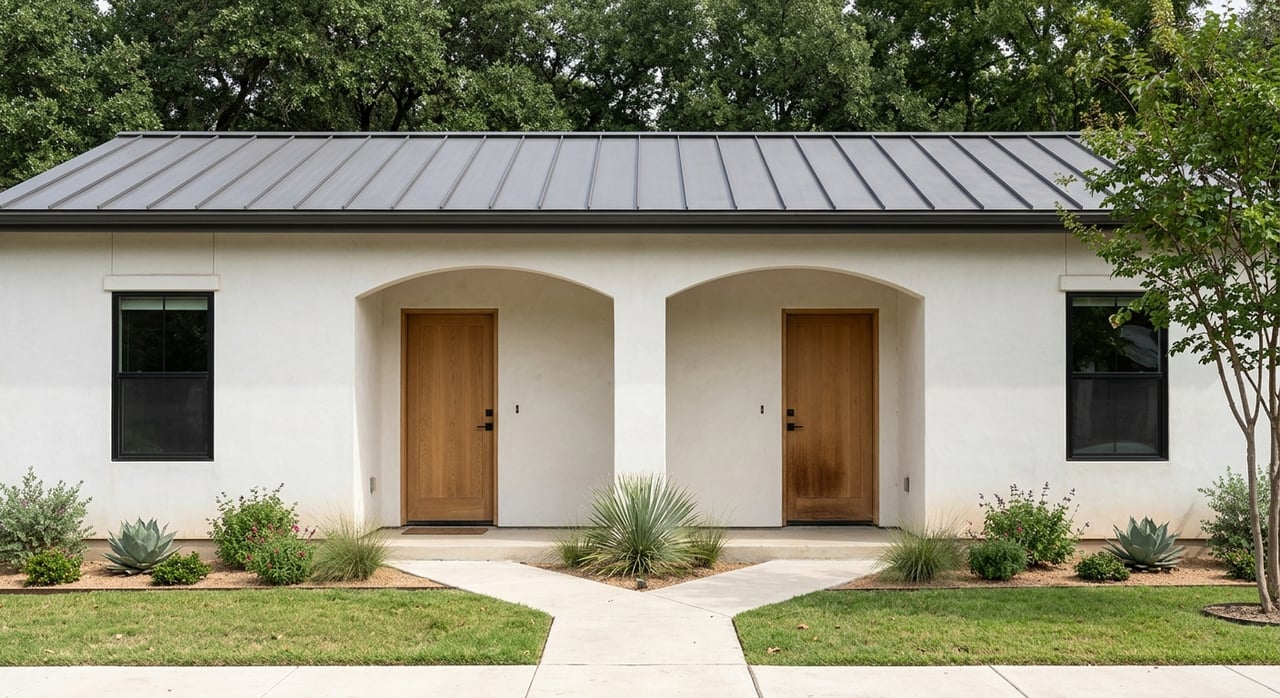
Thinking about buying a duplex, triplex, or fourplex in East Austin? In 78702, small multifamily investing can look exciting on paper, but the real story is in the details. If you want to invest wisely, you need to understand local demand, pricing pressure, zoning, permitting, and lease-up realities before you commit. Let’s dive in.
Why 78702 Draws Small Multifamily Investors
East Austin’s 78702 ZIP stands out because it is a renter-heavy area with meaningful housing demand. CensusReporter shows 14,986 housing units in the ZIP, with 59% renter occupancy and a 28.1% move rate in the prior year. That level of renter activity can make small multifamily appealing if you are looking for steady leasing demand.
At the same time, this is not a low-cost acquisition market. CensusReporter reports a median owner-occupied home value of $686,800, and City-data’s ACS-based profile lists median gross rent in 2024 at about $2,146. In simple terms, rents may be meaningful, but purchase prices can still make cash flow tight unless you underwrite carefully.
Another important point is supply. In 78702, 52% of the housing stock is made up of single-unit structures, which means true small multifamily opportunities can be limited. That often makes each deal more property-specific, where layout, condition, zoning, and execution matter more than broad neighborhood averages.
What Makes Small Multifamily Different Here
A duplex or fourplex in East Austin is not just a smaller version of a big apartment investment. In this part of Austin, value usually comes from location, rentability, unit layout, and operational follow-through. That means your success often depends less on scale and more on how well you evaluate and execute the plan.
For many buyers, the opportunity is in improving an older property, tightening operations, or repositioning units over time. But that does not mean every cosmetic update creates value. In 78702, systems, compliance, and functional livability matter just as much as finishes.
Start With Zoning and Use Verification
Before you make an offer, confirm exactly what the property is allowed to do today. The City of Austin states that a Zoning Verification Letter confirms the current zoning designation for a property, and the city’s zoning resources explain that zoning controls uses, height, setbacks, building coverage, impervious cover, and other site standards.
That matters because an existing duplex, triplex, or fourplex should not be treated as automatically expandable or easy to reconfigure. A property may have existing improvements, but your future plans still need to fit current zoning and site rules. If your investment strategy depends on adding units, expanding square footage, or changing layout, you should verify that path early.
Understand the Permit Path Before Renovating
In Austin, the review process can change based on unit count and scope of work. The city’s Residential Plan Review division handles new construction, additions, interior remodeling, and demolition for certain residential projects, and its current materials note process changes affecting four-unit development projects.
One key distinction is that a fourplex is not simply a bigger duplex from a permitting standpoint. Austin states that four-unit developments are classified as multifamily residential and are exempt from the site plan process, while three- and four-unit projects have specific landscaping review requirements. That means the process you face can vary materially depending on how the property is configured and what you plan to change.
Austin also notes typical review timelines. New construction and additions are generally reviewed in 15 business days, while interior remodels are generally reviewed in 5 business days. The city also notes that many projects may require a Certificate of Occupancy before legal occupancy, which can affect your renovation schedule and lease-up timing.
Build Due Diligence Around Older Buildings
If you are buying an older small multifamily property in East Austin, spend extra time on physical due diligence. Austin’s residential review materials specifically point to technical issues such as foundation work, roofing, wall-bracing, and interior remodel questions. Those are not minor details if your business plan depends on fast turns and stable operations.
Large trees can also matter. The city flags tree review when certain trees are present, which can affect timelines and project scope. In practical terms, that means your underwriting should allow room for review time, inspections, and issue resolution instead of assuming a fast cosmetic renovation.
A smart inspection process should help you answer questions like these:
- Is the current unit layout functional and legally usable?
- Are there known foundation or roofing concerns?
- Will planned renovations trigger permit review?
- Could inspections or occupancy requirements delay move-in?
- Are trees or site conditions likely to affect construction plans?
Be Conservative About Lease-Up
It is easy to build a pro forma that assumes units rent quickly at optimistic rates. In today’s Austin multifamily environment, that can be risky. Matthews’ Q1 2025 Austin multifamily report states that market vacancy reached 14.9%, the highest in the country, after 31,000 units were delivered in 2024, and average asking rents fell 4.1% year over year.
That does not mean every duplex or fourplex in 78702 will perform like a large apartment complex. Small multifamily in East Austin has its own demand drivers, especially in a renter-heavy ZIP. But the broader market still supports a more cautious leasing strategy, especially if your plan depends on post-renovation rent growth.
The 28.1% move rate in 78702 suggests turnover is normal, which can support leasing activity when units are priced well and presented properly. Even so, lease-up should be treated as a process, not an instant event. Marketing time, make-ready work, inspections, and vacancy between tenants should all be part of your timeline.
How to Think About Cash Flow
The basic math is simple, even if the execution is not. Gross rent minus vacancy and operating expenses gives you net operating income, or NOI. Then NOI minus debt service and reserves gives you cash flow.
The challenge in 78702 is making sure your assumptions are realistic. Purchase prices are relatively high, and operating costs can be meaningful. If your income projections are aggressive or your expense line is too light, the deal can look better on paper than it performs in real life.
Property taxes deserve close attention in Travis County. The county’s FY2026 taxpayer impact statement says the FY2025 adopted county tax rate was $0.344445 per $100 of taxable value, and that the county portion will rise versus the prior year. For investors, that means taxes should be modeled as a serious operating expense, not treated as a small placeholder number.
Use Scenario-Based Underwriting
One of the best ways to evaluate a small multifamily deal in East Austin is to run multiple scenarios before you buy. A single optimistic spreadsheet rarely tells the whole story. A more useful approach is to test what happens if rents come in softer, turns take longer, or expenses run higher than expected.
A practical framework is to model at least three versions of the deal:
- Stabilized case: units lease at your expected long-term rents with normal vacancy
- Softer income case: rents come in below target or concessions are needed
- Slower lease-up case: renovations, inspections, or marketing take longer than planned
This kind of underwriting is especially important in Austin’s current market, where new supply and higher vacancy have changed the leasing environment. In many East Austin investments, the difference between a strong result and a disappointing one comes down to execution, not just the purchase price.
Financing Questions to Clarify Early
Your financing options may depend in part on whether you plan to live in one of the units. The research indicates that owner-occupants may find conventional or government-backed residential loans relevant, while pure investors should speak with a lender about investment-property financing.
No matter which direction you take, it helps to get clear answers early on qualification standards, projected payments, reserve requirements, and closing costs. The research also notes that buyers should compare official Loan Estimates before choosing a lender. If you are evaluating multiple financing paths, that side-by-side comparison can make the true cost much easier to understand.
Why Professional Management Can Add Value
In a market like 78702, owning a small multifamily property is about more than collecting rent. Leasing, maintenance, turnovers, inspections, and compliance can all affect how quickly a property reaches stable performance. If your strategy involves renovations or active repositioning, those moving parts become even more important.
That is one reason professional property management can be valuable for investor owners. With Austin’s permit and occupancy requirements in the mix, strong management can help reduce friction and keep the business plan on track. For many owners, especially those balancing other work or living outside the immediate area, that support can be a real advantage.
The Bottom Line on East Austin Multifamily
Small multifamily investing in 78702 can offer real opportunity, but it rewards discipline more than shortcuts. You are buying into a renter-heavy part of East Austin with meaningful demand, but also higher acquisition costs, limited true small multifamily supply, and renovation plans that often require careful coordination with city rules.
If you want to invest well here, focus on the basics. Verify zoning, understand the permit path, inspect older buildings carefully, underwrite taxes and vacancy conservatively, and give lease-up more time than you think you need. In East Austin, the strongest deals are often the ones where your execution matches the market reality.
If you are considering a duplex, triplex, or fourplex in East Austin and want a local, property-specific strategy, Christine Hsu can help you evaluate opportunities with clear guidance, neighborhood insight, and hands-on support.
FAQs
What makes 78702 attractive for small multifamily investing?
- 78702 has strong renter presence, with 59% renter occupancy and a 28.1% move rate, which points to active rental demand in East Austin.
Why is zoning important for East Austin duplexes and fourplexes?
- Zoning affects allowed uses, setbacks, height, building coverage, and other site standards, so you should confirm current zoning before assuming you can expand or reconfigure a property.
How does Austin permit review affect small multifamily renovations?
- The permit path can change based on unit count and project type, and some projects may also require inspections and a Certificate of Occupancy before legal occupancy.
Should you assume fast lease-up for a renovated 78702 property?
- No. Even in a renter-heavy area, lease-up should be modeled conservatively because Austin’s broader multifamily market has elevated vacancy and softer asking rents.
What expenses matter most when underwriting East Austin multifamily?
- Vacancy, turn costs, repairs, reserves, and property taxes all matter, and Travis County taxes should be treated as a meaningful operating expense.
When does professional property management help with a small multifamily investment?
- Property management can be especially useful when your plan involves renovations, tenant turnover, maintenance coordination, or compliance with local occupancy and permitting requirements.